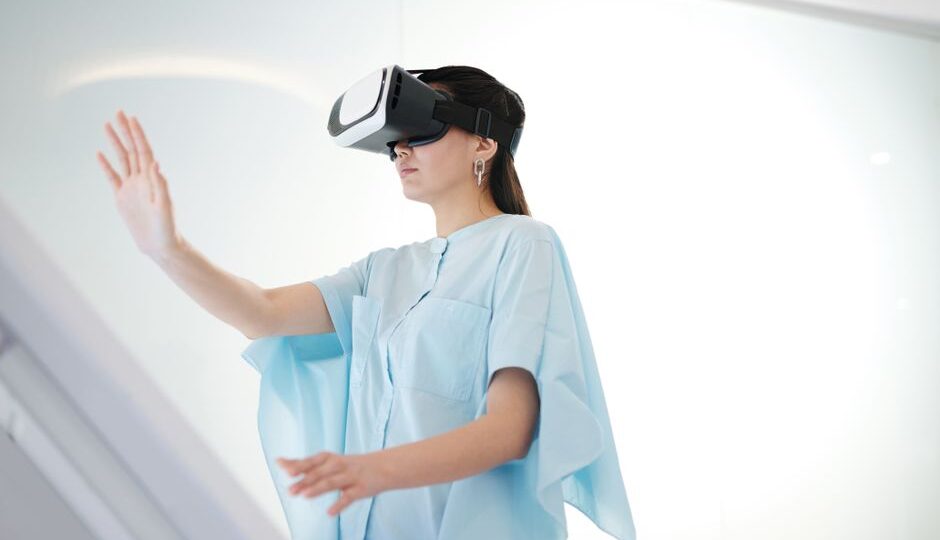
Welcome to a Silent Revolution
In 2026, technology has transformed the way we interact with our devices. No longer are we limited to touch screens and voice commands. Gesture-control technology is quietly making its mark, allowing us to communicate with our gadgets in a more intuitive and seamless manner. This technology taps into one of our most primal forms of communication—gestures—transforming them into powerful commands for an array of devices.
The Technology Behind Gesture Control
At its core, gesture-control technology uses sensors and cameras to detect and interpret user movements. Companies like Leap Motion and Ultraleap have paved the way with sophisticated hand-tracking systems that capture even the subtlest of finger movements. These devices use infrared sensors to create a digital map of your hands, translating physical gestures into digital signals that your devices understand.
Beyond these external devices, new advancements in machine learning algorithms have allowed for more accurate and responsive gesture recognition. By 2026, gesture control is no longer just a novelty but an integrated part of everyday tech interaction. Many smartphones, smart TVs, and even vehicles now come equipped with built-in gesture sensors.
Practical Applications of Gesture-Control Technology
- Smart Homes: Imagine walking into your living room and swiping your hand in the air to change the channel or dim the lights. Gesture-control technology makes it possible to interact with your smart home without lifting a finger—literally.
- Automobiles: With gesture control, adjusting your car’s settings is safer and more convenient. Change the volume of your music, answer calls, or navigate through GPS without taking your hands off the wheel.
- Gaming: Gaming has never been more immersive. With gesture control, players can experience a new level of interaction, using real-world movements to control in-game actions.
- Healthcare: Surgeons can now manipulate medical images during operations using gestures, reducing the need for physical contact with potentially contaminated surfaces.
Challenges and Criticisms
While the potential for gesture-control technology is vast, it’s not without its challenges. One major hurdle is ensuring the accuracy of gesture recognition in different lighting conditions and environments. Moreover, while reducing touch interaction can improve hygiene, it also requires users to learn a new language of gestures, which might not be intuitive for everyone.
Privacy concerns also loom large. The cameras and sensors required for gesture control continuously capture data, raising questions about how this information is stored and who has access to it. Tech companies are under increased pressure to implement robust privacy measures to protect user data.
The Future of Silent Interaction
The evolution of gesture-control technology in 2026 signals a broader shift towards more natural and human-centered interaction with technology. As algorithms and sensors continue to improve, we can expect even more precise and nuanced gesture recognition, paving the way for a world where our devices can understand us just as fluently as we understand them.
For businesses, integrating gesture-control technology can be a game-changer, enhancing customer experiences in retail, hospitality, and beyond. Imagine a future where ordering food in a restaurant is as simple as pointing at your desired dish on a digital menu.
Practical Takeaway
For those looking to embrace this silent revolution, now is a great time to start exploring gesture-control devices and applications. Whether you’re upgrading your smart home, enhancing your gaming setup, or simply curious about the future of tech, gesture control offers a more intuitive and efficient way to interact with the digital world. Keep an eye on this space, as the silent revolution is just getting started.