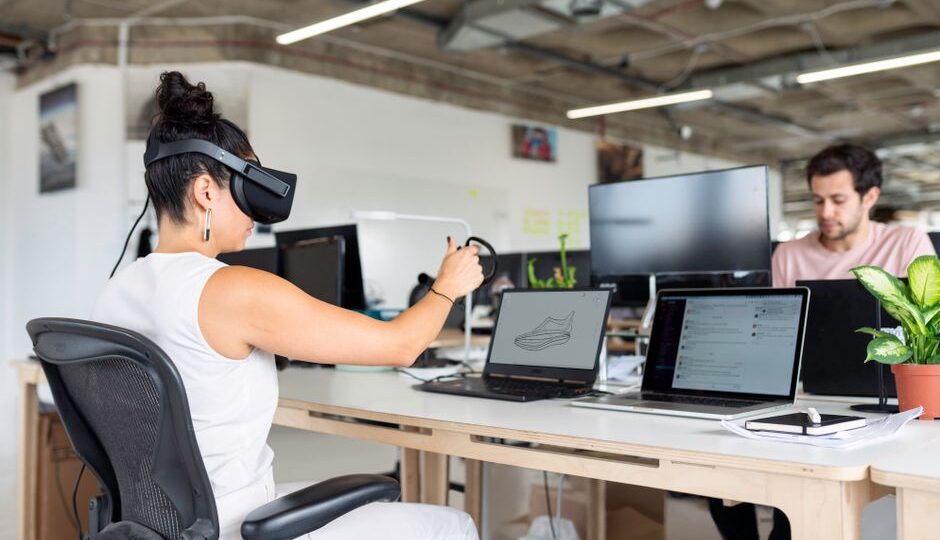
The Dawn of Hybrid Reality Workspaces
As we breezed past the mid-2020s, a new trend emerged in professional environments: the hybrid reality workspace. Combining the best of virtual and physical spaces, these innovative offices are revolutionizing the way we work, collaborate, and even unwind.
In cities like San Francisco and Tokyo, companies are embracing this new model to enhance productivity and employee satisfaction. Imagine a day where you can attend a meeting in a virtual reality (VR) conference room and then stroll over to a meditation pod to recharge. Welcome to the hybrid reality workspace.
Seamless Integration of Virtual Reality
Virtual reality has come a long way from bulky headsets and limited applications. The latest devices are lightweight, wireless, and seamlessly integrate with existing office setups. Companies like Oculus and HTC have developed VR systems that not only support high-definition video conferencing but also incorporate real-time data visualization.
In these virtual environments, employees from around the globe can collaborate on projects as if they were in the same room. For example, a team working on a design in Munich can effortlessly interact with their counterparts in New York, altering 3D models in real time.
The Role of Augmented Reality in Physical Spaces
Augmented reality (AR) is transforming physical offices by overlaying digital information onto the real world. Companies are using AR to enhance meetings, providing visual aids that hover in the air, or integrating interactive dashboards directly onto desks.
Consider a financial meeting where stock charts are displayed as three-dimensional graphs right on the conference table, allowing for an intuitive understanding of data. This blend of physical and digital elements creates a dynamic workplace that fosters creativity and innovation.
Flexible Workstations and Multi-Sensory Experiences
Flexibility is a key component of hybrid reality workspaces. Gone are the days of fixed cubicles and static setups. Modern offices feature movable furniture, adjustable lighting, and customizable ambient soundscapes to suit different work styles and preferences.
Moreover, multi-sensory experiences are being integrated to boost employee well-being. Imagine a desk that emits calming scents during a stressful project, or a room that adjusts its temperature and lighting based on your mood. These subtle enhancements can significantly improve focus and productivity.
Challenges and Opportunities
Despite their potential, hybrid reality workspaces come with challenges. Security remains a paramount concern as sensitive information traverses virtual and physical realms. Companies must invest in robust cybersecurity measures to protect data across all platforms.
On the bright side, these workspaces offer a unique opportunity to attract top talent. A recent survey found that 68% of employees prioritize flexible working arrangements, and hybrid reality workspaces provide exactly that.
Practical Takeaway
For businesses looking to adopt this trend, start small. Invest in VR headsets for remote meetings, experiment with AR tools in presentations, and gradually redesign office spaces to accommodate flexible workstations. The goal is to create an environment where technology enhances rather than overwhelms employees.
Embracing the hybrid reality workspace not only keeps you ahead of the tech curve but also fosters a more engaged and satisfied workforce. As we move towards 2027, the integration of virtual and physical offices will likely become the norm, setting new standards for workplace innovation.